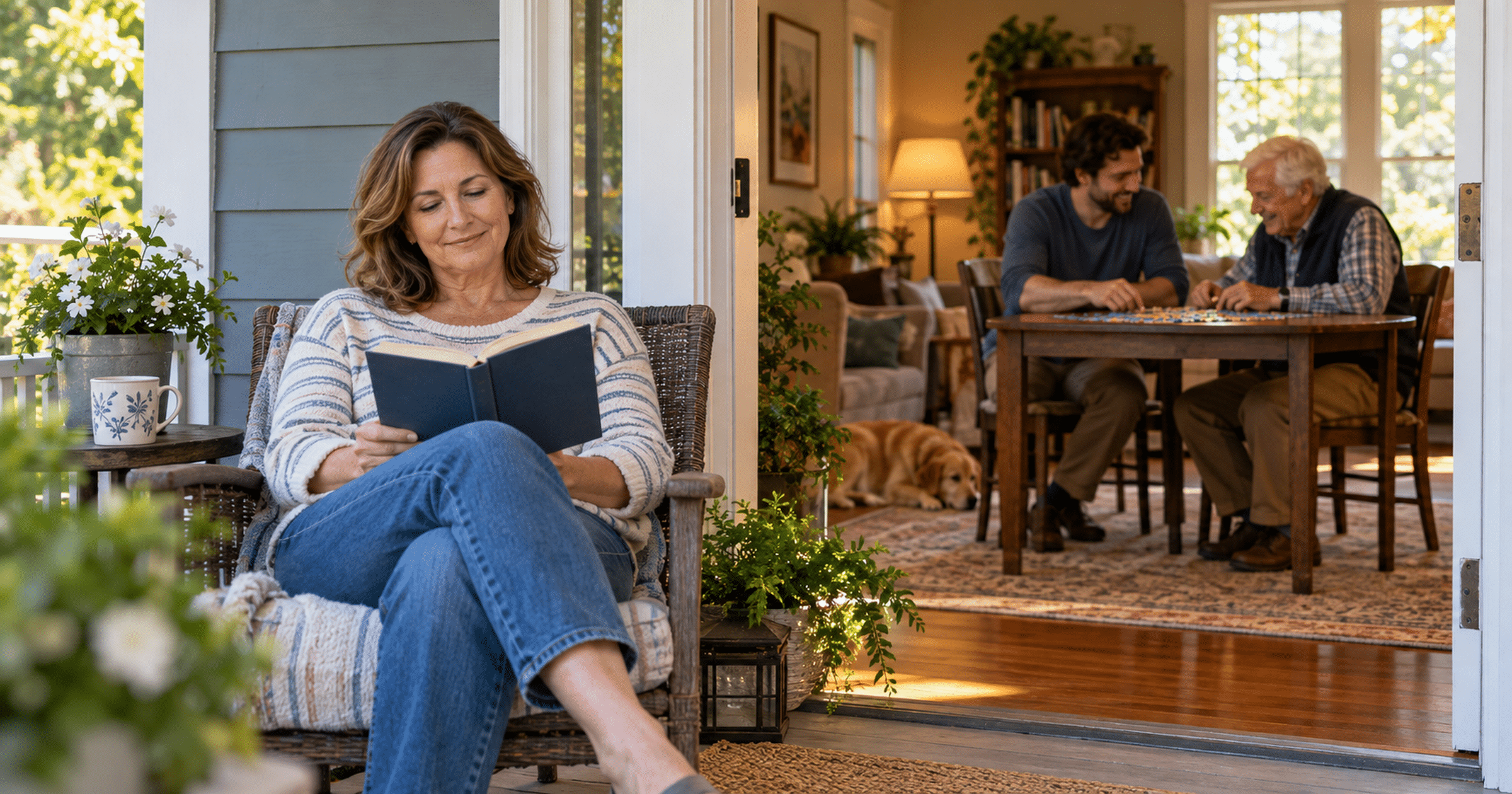

If someone you love has been diagnosed with Alzheimer’s disease or another form of dementia, one of the first questions is usually, “Can they stay at home?” For many families, the answer is yes, especially with the right plan, the right support, and a little help along the way. This guide walks through what dementia care at home really involves, stage by stage, so you can make decisions with more confidence and less fear.
Quick answer: Dementia care at home means adapting the home, the daily routine, and the way you communicate so a person living with dementia can stay safe, comfortable, and engaged in familiar surroundings. Most families combine their own caregiving with trained in-home caregivers, increasing support as the disease progresses.
Why Dementia Care at Home Often Works Best
People living with dementia rely heavily on familiarity. Their own bed, their favorite chair, the view from the kitchen window, the sound of a neighbor’s dog: these small, known details help anchor them when memory and reasoning start to slip. A move to an unfamiliar setting can increase confusion, anxiety, and agitation.
Staying home also keeps daily life personal. Meals can follow lifelong preferences. Routines can be built around the person’s natural rhythms instead of a facility schedule. And family members can stay closely involved without visiting hours. That doesn’t mean home care is always the right answer forever, but for many people it’s the right place to start, and often the right place to stay much longer than families expect.
Understanding the Stages of Dementia
Dementia is progressive, so care needs change over time. Every person is different, but most families find it helpful to think in three broad stages. (For a deeper look, see our guide to understanding the stages of dementia.)

Early Stage
In the early stage, your loved one may still live fairly independently but struggle with short-term memory, finding words, managing money, or keeping track of appointments and medications. Support at this stage is often light: reminders, help with errands and transportation, and someone to notice changes. It’s also the best time to talk about wishes, legal documents, and future care, while your loved one can fully take part in those decisions.
Middle Stage
The middle stage is usually the longest, and it’s when daily care becomes more hands-on. Your loved one may need help with dressing, bathing, and toileting. Confusion about time and place, repetitive questions, wandering, and late-day restlessness (often called sundowning) are common. This is when many families bring in regular in-home help so the primary caregiver doesn’t burn out.
Late Stage
In the late stage, people living with dementia typically need help with nearly all daily activities, including eating and moving safely. Communication becomes mostly nonverbal. Comfort, dignity, and connection become the center of care. Many families combine in-home caregivers with hospice support during this time.
Building a Daily Routine That Works
A predictable routine is one of the most effective tools in dementia care. When each day follows a familiar rhythm, your loved one doesn’t have to work as hard to figure out what comes next, and that lowers anxiety for everyone.
- Keep wake-up, meals, and bedtime at roughly the same times each day.
- Schedule bathing and appointments for the time of day your loved one is usually calmest, often the morning.
- Build in purposeful activities, like folding towels, watering plants, or looking through photo albums.
- Plan quiet, low-stimulation time in the late afternoon to help prevent sundowning.
- Keep a simple written or picture schedule where your loved one can see it.
Our article on creating a daily routine for seniors has more ideas you can adapt.
Communicating With Someone Who Has Dementia
As dementia progresses, the way you talk matters as much as what you say. Speak calmly, use short sentences, and ask one question at a time. Offer simple choices (“Would you like the blue sweater or the red one?”) rather than open-ended questions. Avoid arguing or correcting. If your mother insists it’s 1985, joining her reality usually goes better than insisting on the facts.
Nonverbal cues carry more weight over time. Make eye contact, smile, and use gentle touch when it’s welcome. For practical scripts and examples, read our guide on communication strategies for a parent with dementia.
Making the Home Safe
Dementia affects judgment and spatial awareness, so ordinary household items can become hazards. A few changes go a long way:
- Remove tripping hazards like loose rugs and cords, and add night lights along the path to the bathroom.
- Lock up medications, cleaning products, firearms, and sharp tools.
- Consider stove shut-off devices and lower the water heater temperature to prevent burns.
- Add door chimes or alarms if wandering is a concern.
We cover this in detail in How to Make a Home Dementia-Friendly.
Caring for the Caregiver
Dementia caregiving is a marathon. Spouses and adult children often carry the load for years, and it’s common to feel exhausted, isolated, or guilty for wanting a break. Those feelings don’t mean you’re failing; they mean you’re human. Building in regular breaks isn’t a luxury. It’s what keeps the whole care plan working.
Respite care gives family caregivers time to rest, run errands, or simply sleep, while a trained caregiver stays with their loved one. Support groups, honest conversations with siblings, and a realistic look at your own limits all help too. If you’re feeling stretched thin, our guide to avoiding caregiver burnout is a good place to start.
How In-Home Dementia Care Helps
Professional in-home dementia care can be as light as a few hours a week or as complete as round-the-clock support. A trained caregiver can help with:
- Personal care like bathing, dressing, grooming, and toileting, handled with patience and dignity
- Medication reminders, meal preparation, and hydration
- Companionship and engaging activities that fit your loved one’s interests and abilities
- Supervision to reduce wandering and prevent falls
- Consistent routines that lower confusion and agitation
- Regular updates so family members always know how things are going
Consistency matters. Seeing the same familiar caregiver helps build trust, which makes personal care easier and days calmer.
When Is It Time to Get Help?
Many families wait longer than they should, often until a fall, a wandering incident, or a caregiver health crisis forces a change. Consider bringing in support if your loved one is missing medications or meals, if personal hygiene is slipping, if they’ve gotten lost or left the stove on, or if you haven’t had a real break in weeks. Starting early, even with a few hours a week, lets your loved one get comfortable with a caregiver before needs become urgent.
Frequently Asked Questions
Can someone with dementia live alone?
In the early stage, some people can live alone with check-ins, reminders, and safety measures in place. As memory, judgment, and safety awareness decline, living alone becomes risky. Regular in-home support is often the bridge that lets a person stay at home longer.
How much care does a person with dementia need?
It depends on the stage and the person. Early on, a few hours a week may be enough. In the middle stage, daily help is common. In the late stage, many people need care around the clock. A free care assessment can help you match support to real needs.
Is in-home dementia care different from regular home care?
Yes. Good dementia care uses specific approaches to communication, routine, redirection, and safety. Ask any provider how their caregivers are trained to support people living with dementia.
How Briggs Home Care Can Help
At Briggs Home Care, our in-home dementia care is built around the person, not just the diagnosis. We take time to learn your loved one’s history, routines, and preferences, then create a care plan that adjusts as needs change. You don’t have to figure this out alone. Find a Briggs Home Care location near you or call 1-833-960-CARE (2273) to schedule a free in-home care assessment.
Explore More in This Series
This guide is the starting point for our dementia care series. Dive deeper into specific topics:
- Alzheimer’s vs. Dementia: Understanding the Difference
- How to Make a Home Dementia-Friendly
- Bathing and Personal Care Tips for Someone With Dementia
- Meaningful Activities for Seniors With Dementia at Home
- Early-Onset Dementia: Supporting a Loved One Under 65
- Eating and Nutrition Challenges in Dementia
- Dementia and Wandering: How to Keep Your Loved One Safe
- Managing Aggression and Agitation in Dementia
- Sundowning: Why It Happens and How to Help
- When Does Someone With Dementia Need More Help at Home?
- Visiting a Loved One With Dementia: Making Time Together Meaningful
Trusted outside resource: Alzheimer's Association